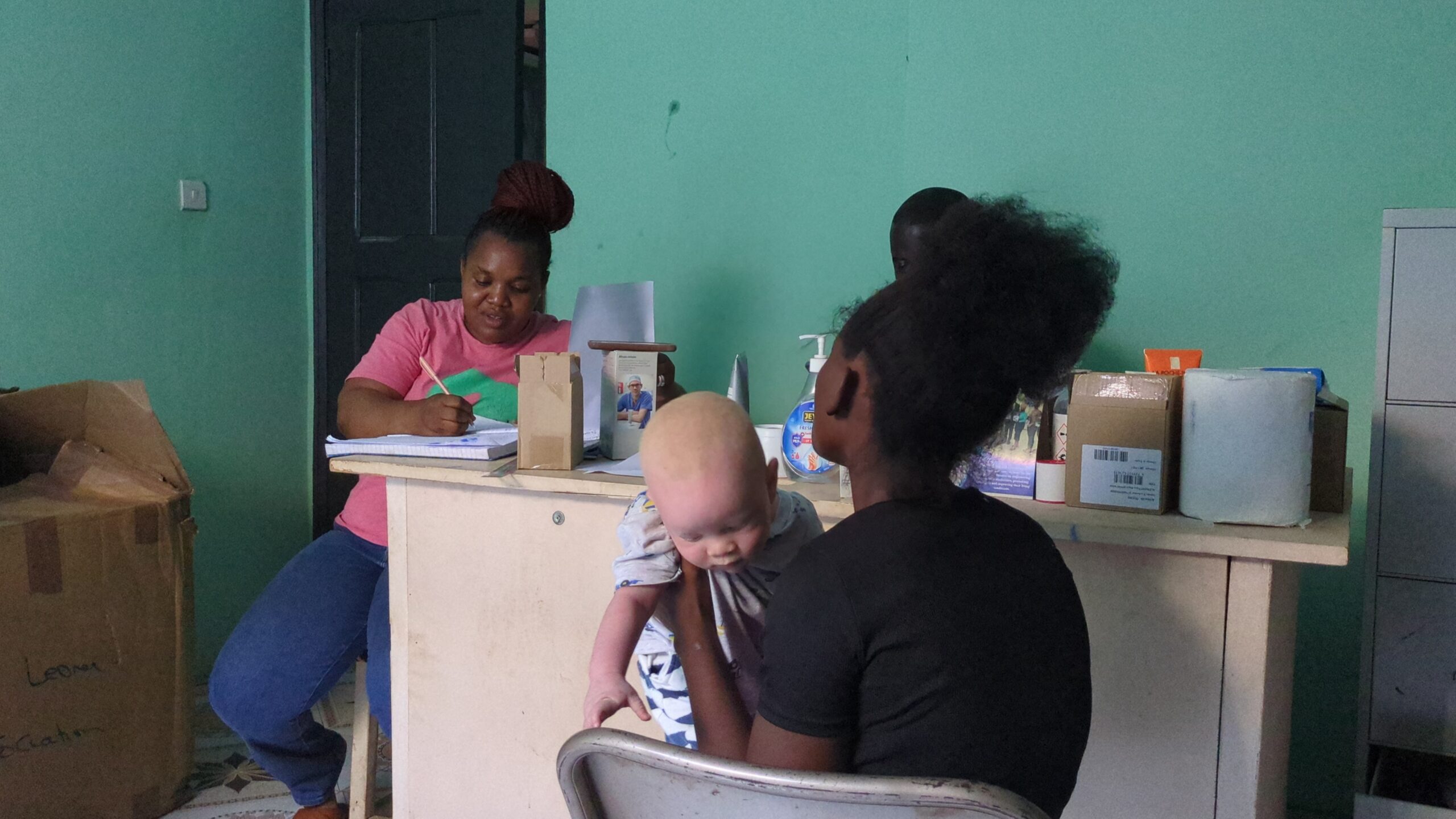
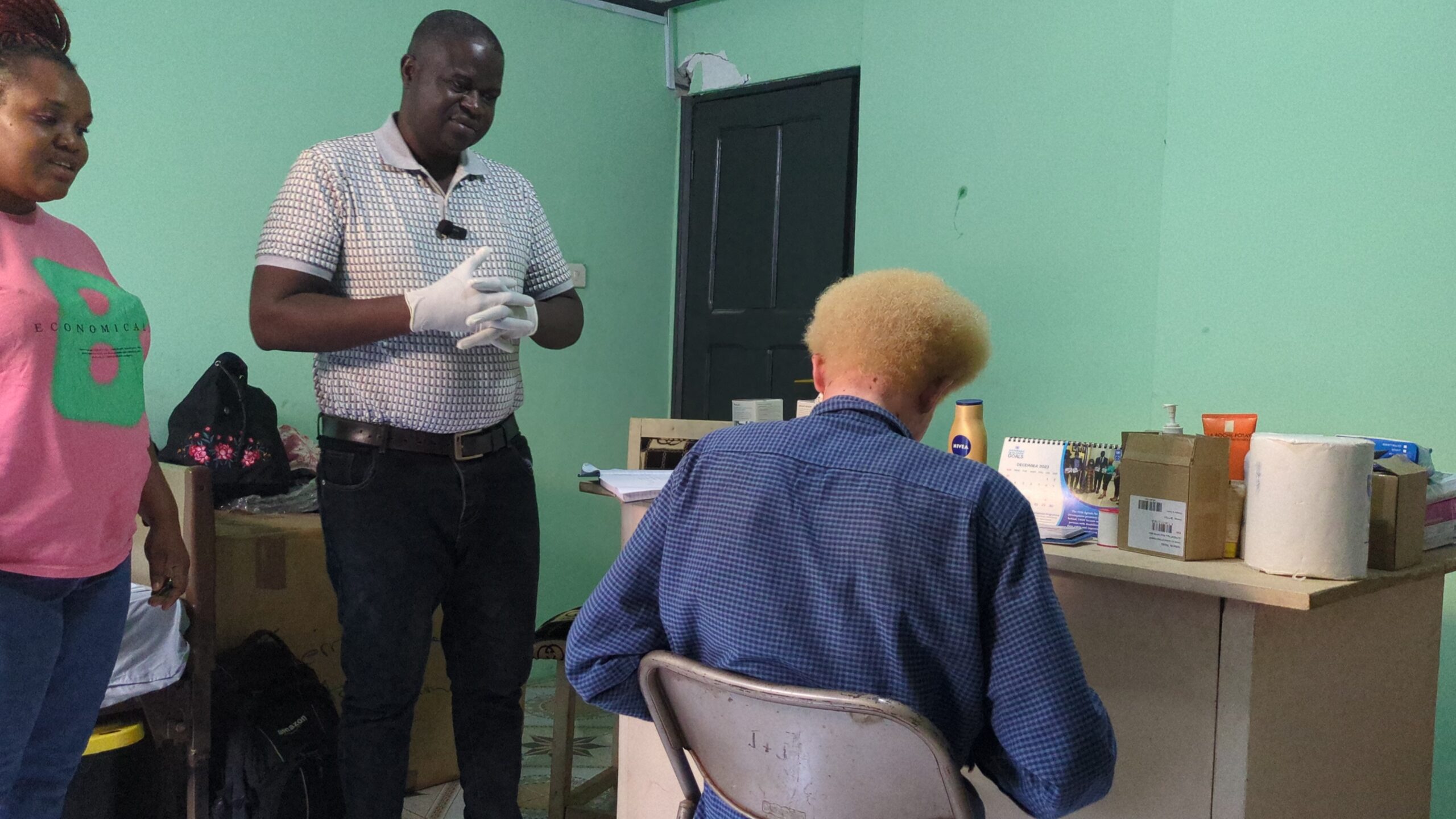
It’s screening day at the headquarters of the Sierra Leone Association of Persons with Albinism (SLAPWA) in Freetown. Among the crowd, a frolicky young boy, Jeremiah, runs around as people are attended to.
At eight, Jeremiah is unaware of the burden he carries due to his skin condition – albinism.
“He is so playful that I make sure that he is always around me,” says Nurse Fatmata Jusu, his mum, who is assisting the Dermatologist on duty.
The screening is a monthly activity for persons with albinism, a genetic condition characterized by a reduced amount or complete absence of melanin in the skin, hair, and eyes. Melanin gives color to these organs and protects them from damage by ultraviolet light.
In Sierra Leone, persons with albinism face neglect, discrimination and exclusion, on top of the medical challenges associated with the condition.
“Even parents are guilty,” says Nurse Jusu, who is a mother of four children, two of whom have albinism. Jeremiah, the youngest, was adopted. He was one year-old when he was taken in, after his biological parents abandoned him. He was born in neighbouring Guinea, and his family moved to Sierra Leone to flee discrimination. Nurse Jusu was informed about Jeremiah by neighbours who were concerned about his condition.
“When we arrived at their home, he was lying on the ground, under the hot sun,” she recalls. “They told us the mother had not returned home for the last three days. And the father only returns in the evening.
“I shed tears on that day.”
The parents eventually declared that they couldn’t afford to care for the boy.
Eight years later, Jeremiah is in Class 4, healthy and full of energy. Nurse Jusu and her husband, both medical practitioners, are finalising his adoption process.
For Nurse Jusu, Jeremiah is an asset in her mission to change deep-rooted perceptions about albinism, which is viewed in Sierra Leonean and most African societies through the lenses of superstition, myths and misconceptions.
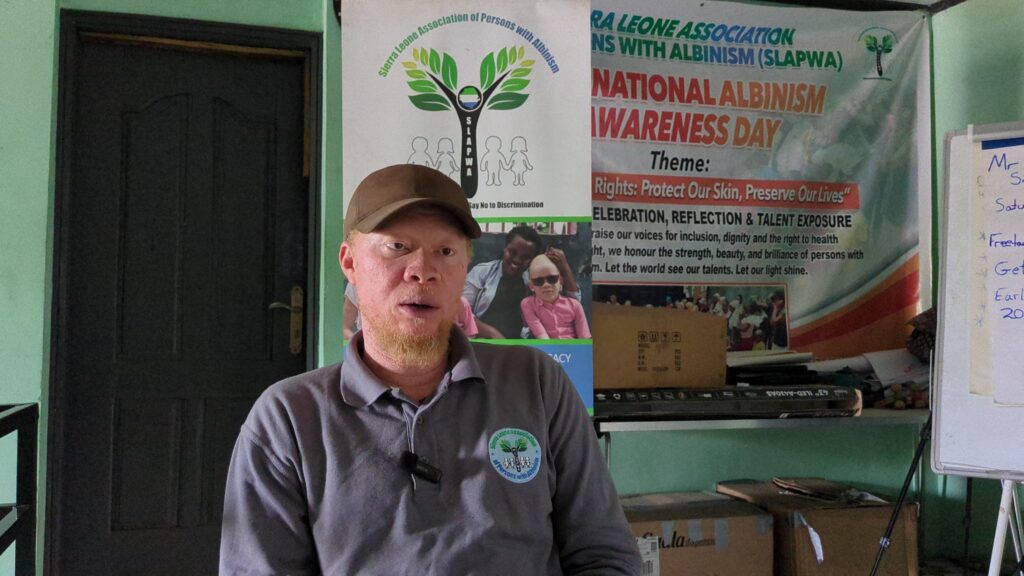
“People believe that persons with albinism are “devils”, and they say we don’t die, we just disappear,” says Mohamed Osman Kamara, Executive Director of SLAPWA, the association of persons with albinism. He says that because of these beliefs, some parents don’t want to publicly associate with their children with albinism.
“Some see their own children as a curse,” he laments.
Osman, himself a person living with albinism, founded SLAPWA in 2015 as an advocacy platform for people, he says, who have been left to fend for themselves in a society that sees them as inhumane. He is worried that these myths serve as distractions from the existential threat posed by the medical complications. Skin cancer is considered their biggest threat.
Over 80% of persons with albinism in Sierra Leone will die an early death from skin cancer, according to the charity Medical Assistance Sierra Leone (MASL), one of SLAPWA’s major donors.
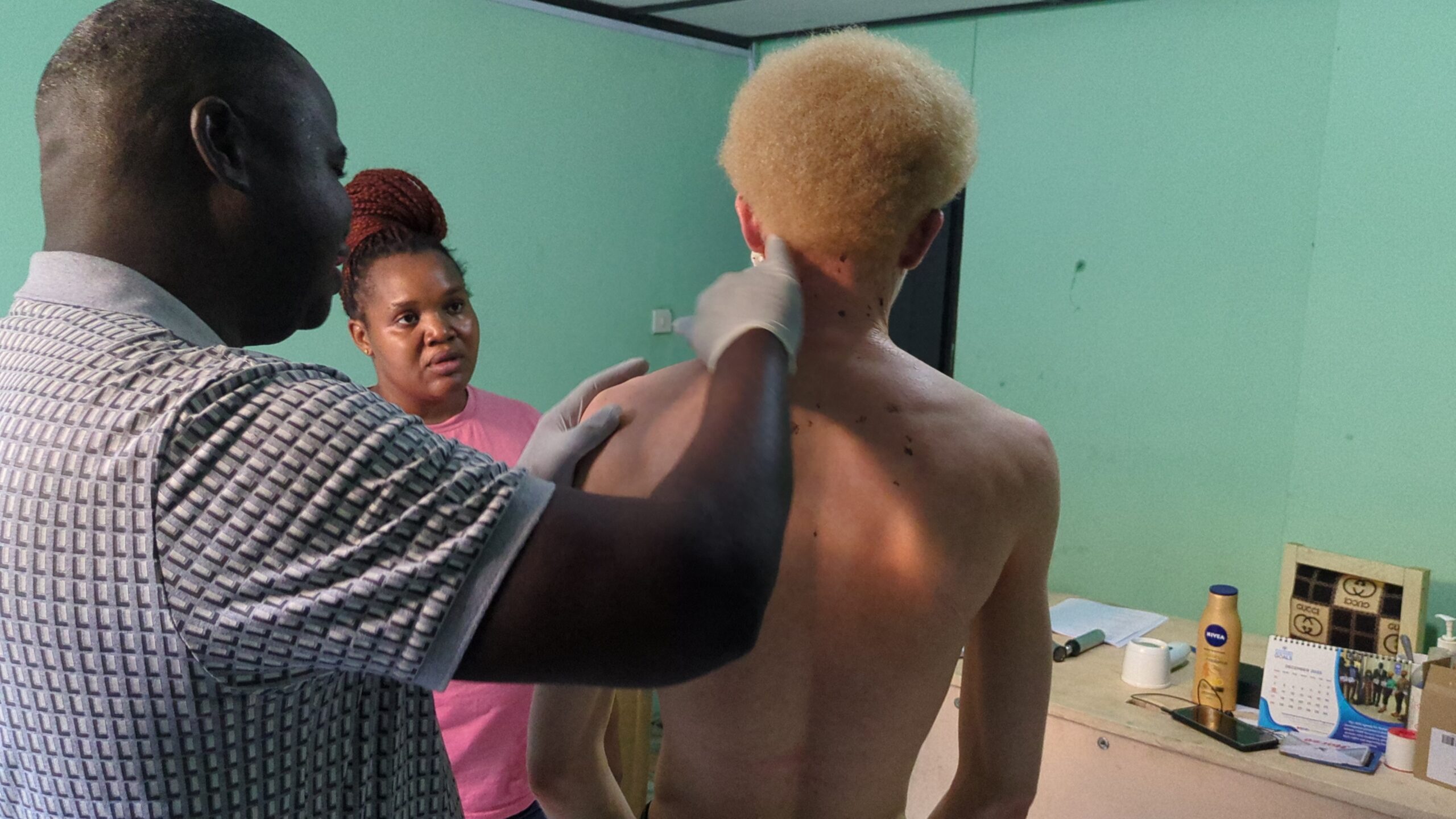
Exposure to the sun causes sunburn, which can lead to blisters and, if left untreated, develop into skin cancer. SLAPWA has recorded 10 deaths in the last four years due to skin cancer.
Dermatologist Dr John Stevens Mbeteh says early detection of skin abnormalities is crucial to prevent skin cancer. He has been working with SLAPWA for the last year and leading nationwide screening of persons with albinism. The monthly exercise also serves as educational sessions on measures to protect against the sun. Individuals are also provided with sunscreen to protect their skin from the direct impact of the sun’s rays.
“Albinism isn’t a death sentence. You can live with it for as long as anybody else, but only if you follow protective measures,” says Dr Mbeteh.
SLAPWA works with international and local supporters to procure protective gear, which is given to people with albinism free of cost. Funding from these donors also enables SLAPWA to maintain regular meetings, including peer engagement, and facilitate attendance of screening sessions for persons in need, especially those in remote locations.
Thanks to such support, Musa Kamara was able to travel all the way from Masingbi in northern Sierra Leone for an examination of a sore on his left jaw. He was referred to the country’s main referral hospital, Connaught, for surgery.
Musa, 18, says he has had to develop a thick skin against the bullying and provocation he faces daily from the public and his schoolmates. He wants to be a journalist.
“The things I go through are what inspire me to be a journalist. I want to fight for people like me,” he says.
A 2020 report by the Albinism Royal Foundation, another local organization advocating for the rights of persons with albinism, revealed that the group has the highest number of dropouts from schools and other learning institutions, and it cited vision problems, bullying, rejection, and neglect, among reasons for this.
While persons with albinism face discrimination across the world, the situation is worse for those in Africa, particularly in Sub-Saharan Africa, according to the UN. And while women and girls are said to often bear the brunt of societal misconceptions and violence, children, especially those in rural areas, are also targeted for violent rituals and often easily drop out of school due to the factors associated with the condition.
In October 2025, the UN Office for the High Commissioner for Human Rights urged African Union Member States to accelerate efforts to address challenges faced by children with albinism, in fulfilment of their obligations under the African Children’s Charter.
The struggle persons with albinism face in Sierra Leone is complicated by their apparent neglect at the state level, says Osman, the Executive Director of the Association of Persons with Albinism. He notes that while albinism is officially designated as a disability, this hasn’t reflected in the treatment they get..
Osman says they used to get free healthcare, except for complex surgeries, in line with provisions in the Disability Act. But now they have to pay for everything, including blood tests, after the Connaught lab was privatized. As a result, even though all surgery cases referred by SLAPWA to Connaught are done free of charge, the organization purchases all commodities needed for the procedure, including medications. This has forced the organization to repurpose resources meant for educational support to healthcare.
“When you talk to government officials, like the Ministry of Social Welfare, the Commission for disability, and others, they tell you that the resources they have are not enough to take care of their mandated tasks. It’s as if they don’t recognise people with albinism,” he says.
The management of Connaught Hospital confirmed that its lab has indeed been privatized. Dr Mark Kapuwa, Hospital Care Manager, told Engage Salone that the hospital is partly run through a public-private partnership model. So, the pharmacy, lab and other services have been privatized.
Dr Kapuwa said persons with albinism fall in the category of persons with disabilities, which makes them qualify for services that fall under the free healthcare category, which they make sure to provide when available.
“There is a test menu and also medications that fall within the free healthcare category, services he says they provide free to persons with albinism when available”. Dr Kapuwa, however, pointed out that Connaught cannot cater to all medical conditions and persons, noting that other medical facilities across the country offer additional services.
“A referral and teaching hospital is there to receive patients already seen and assessed at other facilities for specialist/consultant care,” he said.
With this status quo, Osman’s major concern is what happens with the services they provide as an organization when donor funding stops.
“These supports come in the form of projects, which eventually end. The current support is expected to end at the end of this year – November,” he says.
SLAPWA is a member of the Sierra Leone Union of Disability (SLUDI), the umbrella body of disability advocacy organizations in the country. SLUDI’s President, Joseph Alieu Kamara, acknowledged the challenges faced by persons with albinism, but said it’s a general problem faced by persons with disabilities in the country. He blamed the situation on the slow implementation of the Disability Act, which he, in turn, blames on inadequate resources allocated to relevant government institutions catering to people with disabilities. He also lamented that the Ministry of Social Welfare, which is charged with coordinating the affairs of persons with disabilities, is among the least-funded government ministries.
“Besides the need for adequate resource allocation, every ministry should cater for persons with disabilities, not just the ministry of social welfare,” said Kamara.
“We are dealing with neglect and discrimination in schools. Most buildings are inaccessible. At the hospital, we are told there are no medications available. While we commend the government for passing the law, we urge them to consider implementing it fully,” he stresses.
The neglect is reflected in the lack of data on the community. But estimates by MASL put their number between 1,500 and 3,000. SLAPWA alone says it has registered over 800 through the assistance it provides. Osman says a comprehensive study is needed to ascertain their true number.
“When you know the number, then you know how large the problem is, and you can cater for them,” he says.
John Conteh, Acting Director of Social Welfare and Religious Affairs in the Ministry of Social Welfare, acknowledged the constraints faced by Persons with albinism, noting that their conditions require special attention that involves financial expenditures. Mr Conteh also confirmed that the Ministry faces resource constraints due to low budget allocation. But he stressed that development partners have been complementing the Ministry’s effort, including with assistance to persons with albinism.
“Even though the [Disability] Act doesn’t mention them directly, we consider them as persons with disabilities because they are. So when we provide opportunities and facilities, we may not have all that it takes to serve every group, but we have partners we always work with,” he said.
Apart from the health and social challenges, persons with albinism are also left out of important national discussions like climate change, even though they are among the most affected, Osman notes. “Some people in the villages have to work on the farm under the hot sun. They have no idea about the effect. Some have blisters and they associate it with ‘Witch Gun’,” he says, emphasising the need for outreach and sensitization.
Even Mr Conteh, the Social Welfare Director, agrees and emphasised the need for public awareness raising to curb discrimination against persons with albinism.