The West African regional bloc, ECOWAS, has announced that it has taken “a landmark measure” that will lower the high cost of travel across the region.
“From 1 January 2026, all ECOWAS Member States will remove taxes applied to air transport and reduce passenger and security charges by 25 percent,” the regional bloc says in an article on its website.
The decision, adopted at a summit of Heads of State this month, follows years of technical discussions and negotiations. A key turning point came in November 2024, when transport ministers from across the region endorsed a common strategy to cut air travel costs, a move driven by persistent concerns that “excessive taxes” were inflating fares.
Acknowledging the exorbitant cost of air transportation in West Africa, ECOWAS notes that the region is among the most expensive to fly in the world.
“Currently, passengers are required to pay up to 66 separate charges, while airlines face more than 100 fees when operating flights. Compared to global averages, costs in the ECOWAS region are 85 percent higher for regional flights and 82 percent higher for international routes.”
The ECOWAS Heads of State’s decision is expected to be welcomed by both passengers and the aviation industry. In July, the International Air Transport Association (IATA) urged African governments “to prioritize aviation as a catalyst for economic growth, job creation, connectivity, and social development by enhancing safety, reducing the cost burden…”
In 2024, passengers departing on international flights in West Africa paid an average of US$109 in taxes, charges, and fees, according to the African Airlines Association (AFRAA).
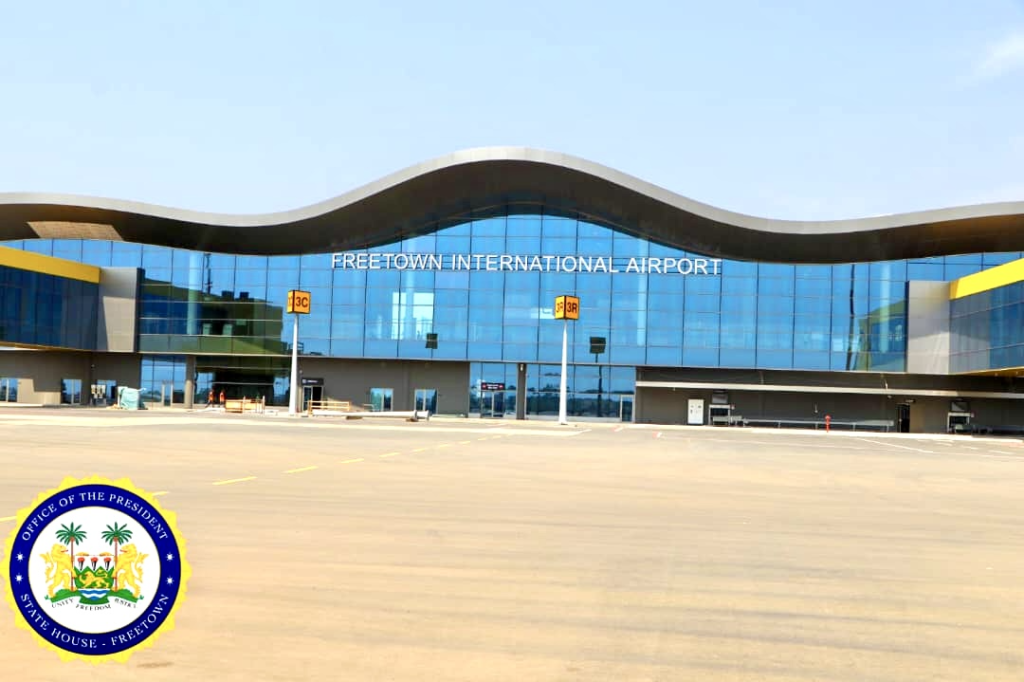
Sierra Leone ranked second most expensive for international departures, with taxes of close to US$300, according to the same study. The country—whose only international airport is located across a body of water from the capital, Freetown, tops the list for ticket-related taxes, charges, and fees, followed closely by Gabon and Nigeria.
ECOWAS believes that high taxes “discourage travel, limit trade opportunities, slow down tourism development and undermine ECOWAS’s flagship programme of the free movement of persons and goods.”
While the bloc projects that ticket prices could fall by as much as 40 percent under the new regime, wider operational constraints might hinder progress. Experts warn that the high cost of fuel, operational expenses, limited competition, and low passenger volume will continue to keep prices high.
In the case of Sierra Leone, the cost of air travel can be attributed to a range of determining factors.
The country’s US$270 million new terminal at Lungi, financed through a “build-operate-transfer” (BOT) model, means that cost recovery depends heavily on passenger charges, landing fees, handling costs, security fees, and other levies. These will affect the extent to which passengers in Sierra Leone realise the benefits of ECOWAS’ decision to slash taxes to reduce travel costs.
Low passenger volumes and limited competition also play a role. In 2024, incoming passenger traffic was approximately 127,177, according to the Sierra Leone Civil Aviation Authority (SLCAA). This is a fraction of the numbers handled by regional hubs such as Accra and Lomé.
Freetown is served by only a few international routes with direct options. Passengers from Sierra Leone often require connections or transit in Accra, Brussels, Istanbul, Addis Ababa and Lomé. Moreover, although not directly connected to airfare, these travellers must pay a security fee of USD $25 for each trip through the airport. Passengers also face challenges related to airport transfers, such as water taxi and ferry costs, road transport, and extra travel time — inconveniences which commentators say discourage demand from foreign travellers.