
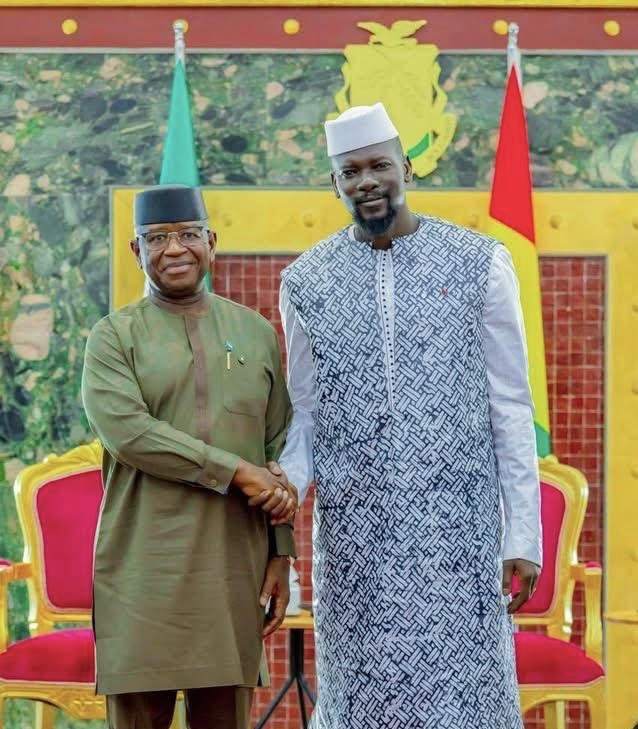
It’s Wednesday morning in Koindu Town, and Victor Tengbeh is set to venture out on another routine – a search for day labour. Just anything that can get him food for his family, he said.
Nearly 14 months ago, Victor was a successful farmer in his own right in Yenga, a community located three miles from Koindu Town, which is the subject of a long-standing border dispute between Sierra Leone and Guinea. Well, for Sierra Leoneans like Victor and other residents, it is more than a dispute. It is an occupation.
“In Yenga, my source of income was farming,” said the father of two.
“I had my cocoa plantation, and I cultivated crops in my swamps, from which I supported my family. Here in Koindu, having lost all our assets, we only have to work for people to support our families from the little we are paid,” he explained.
Victor is one of nearly 200 people displaced after Guinean soldiers reportedly entered their town in April, 2025, forcing them to flee.
“You are in your home, and suddenly they deployed weapons outside your door, raised their flags, set up checkpoints and declared that nobody was allowed to enter or leave. We had to leave,” Victor lamented.
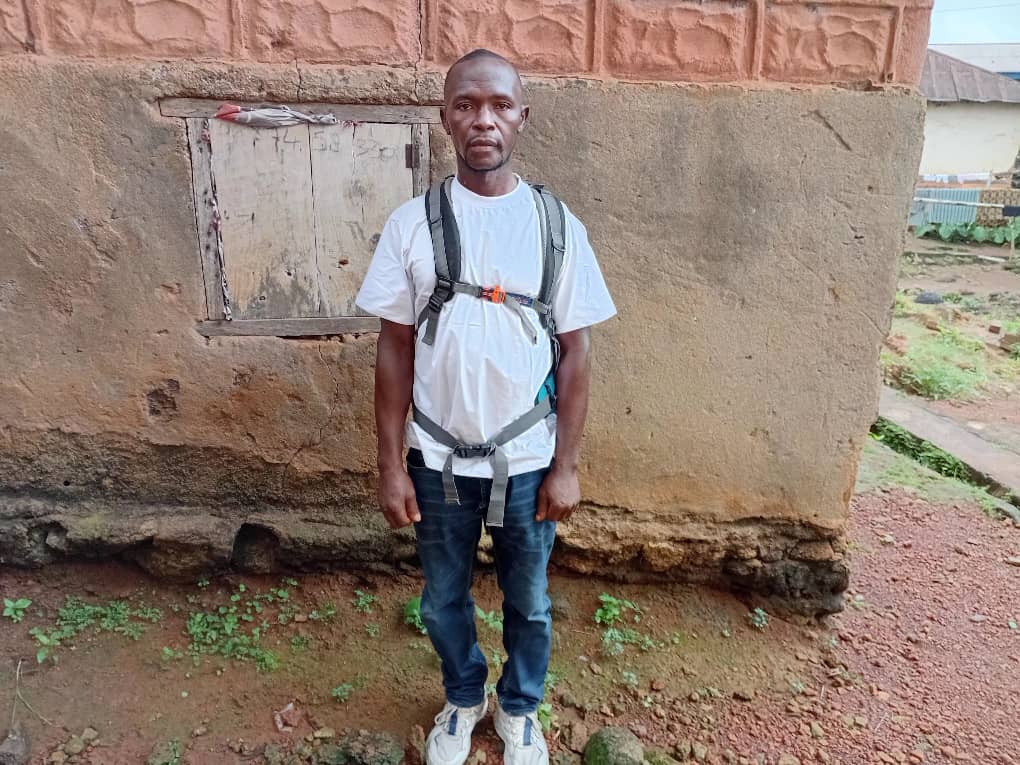
Yenga is located in the Kissi Teng Chiefdom in Sierra Leone’s eastern Kailahun District. It is situated along the Makona River, also known as the Moa River, which acts as the natural international border separating the two countries. But for over two decades now, the area has been a source of conflict between the two neighbours, as Guinea has laid claim to the territory. The Sierra Leone government’s position has been that the place was host to Guinean security forces who had come in to render support during the former’s eleven years (1991-2002) civil war. After the war, they refused to leave.
Several attempts by successive Sierra Leonean leaders, from President Ahmed Tejan Kabba to Ernest Bai Koroma and current President Julius Maada Bio, to resolve the matter peacefully have failed to end what has essentially become an occupation.
It has been difficult to independently verify information about who actually controls Yenga because of security concerns and restrictions by the occupying Guinean forces, whom residents say have put the place under total military control. Yenga is mainly an agrarian community. The residents say the Guineans took over their land, preventing them from farming. They also allege that the only school they had built in 2003 was demolished by the occupying forces, who prevent the construction of any Sierra Leonean institution there. All their children at the secondary school level must travel across three miles daily to attend school in Koindu. Those in primary school go to the surrounding communities and Koindu.
Now in Koindu, the children can’t attend school either because their parents can’t even afford to feed them, let alone pay the associated school expenses like uniforms and books. “We lived under constant harassment. They told us that the land belonged to Guinea and asked us to leave. Sierra Leone was at war, and the war ended, only for us to be confronted and threatened with heavy weapons. We felt our lives were at risk,” said James Marthus, a father of four children who has been displaced from Yenga. Back in Yenga, James grew potatoes and other crops, which he sold to provide for his family. He stressed that they had to leave because the Guineans had taken over Yenga and prevented them from using their farmland.
“Presently, we just survive by day labour. Every morning, everyone goes out searching for a job. We return in the evening to see what we have to feed the children,” James said.
Although there has been no documented full-scale military escalation, the two countries have reportedly engaged in at least four major diplomatic and military standoffs, as well as intermittent cross-border skirmishes over the dispute.
In the early 2000s, following the end of the civil war, the Guinean troops’ refusal to withdraw as agreed led to persistent tensions and border blockades. Between 2012 and 2013, similar skirmishes led to the two neighbours signing a demilitarization agreement in 2012. But even that didn’t work, leading to the intervention from the subregional bloc, ECOWAS. Semblance of calm prevailed until April 2025, when Guinean forces reportedly occupied strategic mining camps and border posts in the area, causing residents like Victor and others to flee. That incident prompted protests in Kailahun, the district headquarter town, with young people calling for the Sierra Leone government to act decisively against what they called persistent Guinean aggression. The two countries came close to a fight after Sierra Leone deployed military reinforcements to Kailahun, forcing more civilians to flee for their safety.
The most recent incident occurred in February 2026, when Guinean forces detained 16 Sierra Leonean security personnel following an alleged illegal crossing into a contested part of the land. That also sparked tensions, which were later de-escalated through diplomacy. President Julius Maada Bio traveled to meet his counterpart, Mamadi Doumbouya in Conakry for talks.
Back in May 2025, the Sierra Leone government requested international intervention, specifically from ECOWAS and the African Union to mediate the dispute. However, a subsequent ECOWAS fact-finding mission ended in failure, after the Guineans denied the envoys access to the area. At the subsequent Heads of State Summit in June in the Nigerian capital, Abuja, the regional leaders called for a de-escalation of tensions through dialogue, demilitarization of the territory, and urged both parties to utilize regional mediation mechanisms to find a peaceful, lasting resolution.
For residents of Yenga, who have been living the experience, the wait for a lasting resolution has been unbearably too long.
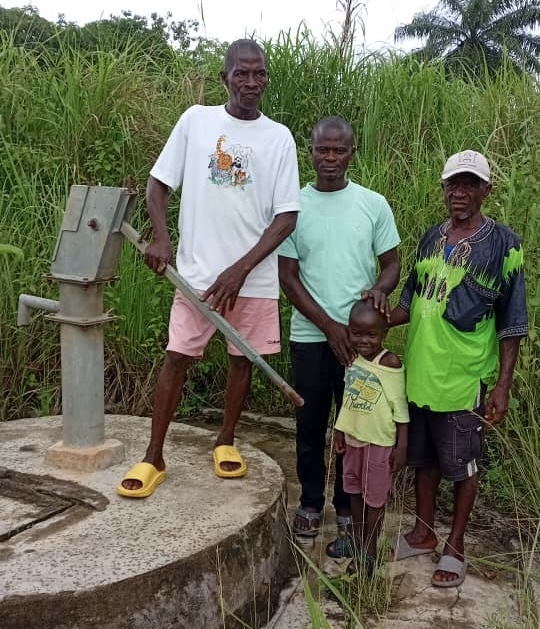
“We are just here hoping to hear from the Sierra Leone Government,” said Tamba Nyuma, Town Chief of Yenga who also fled to Koindu.
“We want to know which nationality they consider us to be. Sierra Leoneans or Guineans? That’s all we want to hear from the Government,” he told Engage Salone.
On July 6th, 2026, the Sierra Leone government issued a statement announcing that the two countries had reopened the Yenga border since the latest skirmishes in February. The statement issued through the office of the Government Spokesman and Information Ministry said the development would allow the resumption of cross border trade and movement between the two countries.
“As part of the agreed arrangements, the Sierra Leone National Revenue Authority will continue to collect revenue on Sierra Leonean territory, including Yenga, while the Sierra Leone Immigration Department will maintain its presence. Both countries also agreed that Guinea will provide Sierra Leone at least 48 hours’ notice before any future border closure,” the statement reads in part. It didn’t say anything about the fate of the displaced Yenga residents such as Victor, James and their children.
Information Minister Chernor Bah told Engage Salone that discussions were underway for the safe return of the displaced. He said the statement conveyed developments on the reopening of the border and paving the way for the free movement of people and goods.
“We made clear that we are working to ensure the safe return of the displaced persons to their homes. We know that it is a process and there are multiple needs to address. We are working with the communities and across the two countries to address any remaining issues and facilitate safe and smooth return of anyone who wishes to return,” he said.
Meanwhile, all the displaced residents who spoke to Engage Salone in Koindu say they can’t wait to return to their homes in Yenga, but they need answers from the government. They say Guinean soldiers are in total control of the area, mounting checkpoints at strategic locations, while Sierra Leonean security forces are kept outside the area.
Chief Nyuma sums up the feeling among his people: “As I speak to you, Guineans are all over the bushes. The Sierra Leonean soldiers have told us several times that Yenga is not yet free from Guinean control. If we go, we will face threats. We won’t get a good life there. We want the government to ensure Yenga is free, and tell us, and then we will return. I can’t lead my people back to Yenga under the current conditions.”
Meanwhile, the plight of the people in their host community is only getting worse by the day as mothers and fathers toil with day jobs for a pittance and host families struggle to support them.
These days, sisters Kumba and Sia Tamba, with four and three children respectively, spend their days weeding on a farm. They receive NLe20 each after a day’s hard work. None of their kids go to school.
“We just need help from the government for our kids to go back to school,” said Kumba.
Sia describes the area as a war zone.
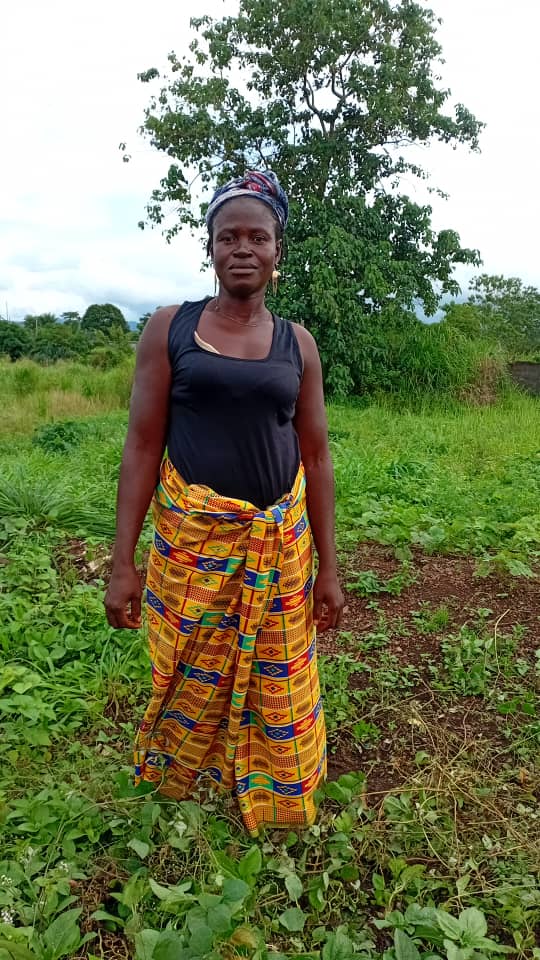
For Victor, he has had to learn how to do labor jobs in masonry, in addition to farming, which he had done all his life. He says he takes whatever opportunity is available now. He gets NLe40 for a day’s work. This amount is complemented by the NLe20 his wife gets from weeding in farms or any other available domestic work. This is what the family uses to feed their two children, ages 8 and 11. Victor lamented the fact that his kids have not attended school since they left Yenga.
“This situation has affected my family greatly, because my future is retrogressing. When your children cannot get an education, it is your future that is retrogressing. Everything we had has been destroyed. It is a source of embarrassment in my life,” he said.
According to Chief Nyuma, 30 families arrived in Koindu on the 1st of May 2025. They were all lodged in a single space hall at Kangama Road, Koindu Town, on their arrival. But with the intervention of some goodwill individuals, eight families, including the Chief’s, were relocated to a local guesthouse that was itself in poor condition. But it’s the best there is available, said the chief.
The rest are scattered across the town, with some squatting with relatives.
“Their arrival brought pressure on Koindu too,” said Younger brother of the Town Chief of Koindu, Elliott Foryoh.
“We had to accommodate them and share food with them.”
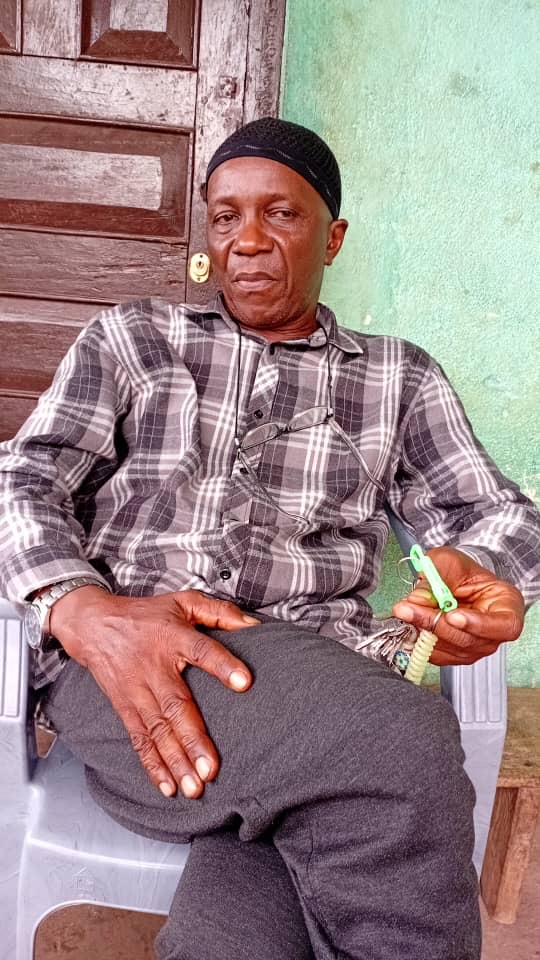
Francis Kettor, a teacher and journalist, is hosting a family of five displaced people. He said he was already struggling to care for his own family of six, on his meagre teacher’s salary.
“We, as hosts, are also suffering. I am hosting five people. I am a teacher, receiving NLe1,500 monthly. I have three children, plus myself, my mother and my wife. And now five people from Yenga. It hasn’t been easy for me. I have to do farming to survive,” he said.
According to the displaced residents, they received rice supply from the government as well as philanthropic individuals and organizations which served them for the first five to six months of their arrival.
Chief Nyuma confirmed that the government’s supply came only once, in the form of rice. He also acknowledged the support of individual politicians, including government ministers. But he said that for the last six months, they have been left on their own.
“My condition is no different from the condition in which other people live. We all struggle to survive daily,” he said.
With additional reporting and editing by Kemo Cham in Freetown