At 22, Amara Kamara had big dreams: earning a university degree, becoming an economist and joining the workforce as a proud young man. He didn’t just dream. He worked hard and enrolled into Njala University, one of Sierra Leone’s oldest universities, a historically famous powerhouse for agricultural sciences and research, economics and teacher training. To those who knew Amara, he was an avid reader, too.
At some point on his journey chasing his dreams, the 22-year-old started demanding too much from no one else but himself. He felt he wasn’t doing enough with his studies. He wanted to do more. At Njala, he approached some study mates he’d observed who were always “very active”. They introduced him to a pill they claimed was behind their energy and prowess. That pill was tramadol, a prescription-only synthetic opioid painkiller. Due to poor regulatory measures, this drug has become one of the most abused in the country. It is one of the substances at the centre of the ongoing devastating drug epidemic in Sierra Leone.
Amara was not seeking recreation. All he wanted was to replicate the hyperactivity he saw in his mates on the Bo campus of Njala University.
“Some said Tramadol gave them endurance. Others said it helped them retain what they read, ” he told Engage Salone.
“I found out that life at university was different from life in secondary school. I needed to study more. I had more assignments to complete,” he added.
Eventually, Amara gave in. He agreed to take half of the tablet.
To his disappointment, Amara didn’t get the outcome he’d expected. He couldn’t even study as he used to, feeling weak and succumbing to endless fatigue. When he confronted his friends about his experience, they told him it was to be expected as a first-timer. They encouraged him to take more. He took more and more, and that marked the beginning of a downward spiral into a deep, costly addiction, forcing him to abandon his studies.
“Before I went to campus, I was very conscious of my appearance. I dressed well. But when I got involved with drugs, I would sell my shoes and clothes. I asked my mother for transport money, but I did not attend lectures. I used the money to buy drugs. No matter the amount of money I had, it would all go into drugs. My condition changed. I stopped attending school. All I was thinking was how to get Tramadol. I sold my notebooks and textbooks,” Amara recalled.
Sierra Leone has had a drug addiction problem since the end of the country’s civil war, but observers say there has been nothing of the magnitude that’s seen in the country today.
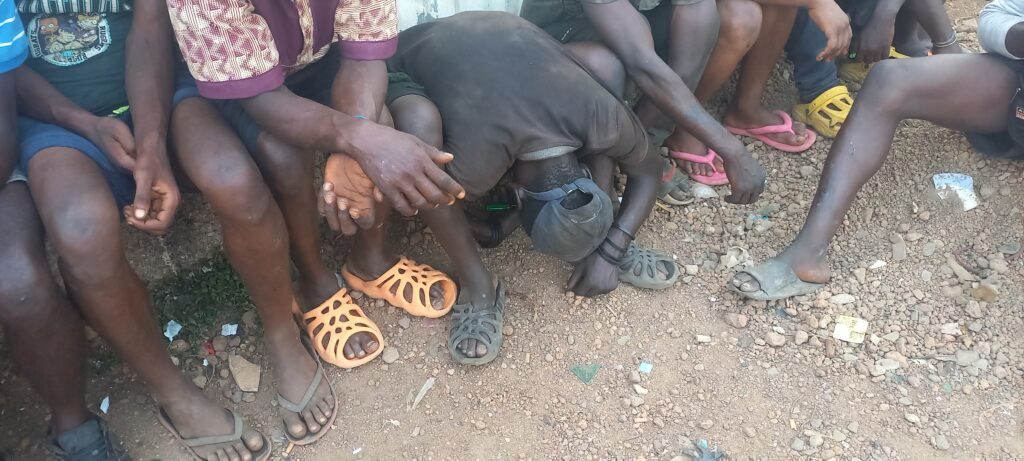
The country’s drug problem has come into sharp focus in recent years. An addiction crisis that once remained confined to the background in ghettos, street corners and impoverished neighbourhoods became an ugly public spectacle when a new synthetic drug, Kush entered the country’s drug scene. It ripped apart communities, immobilising young people in what has become an all too familiar zombie-pose.
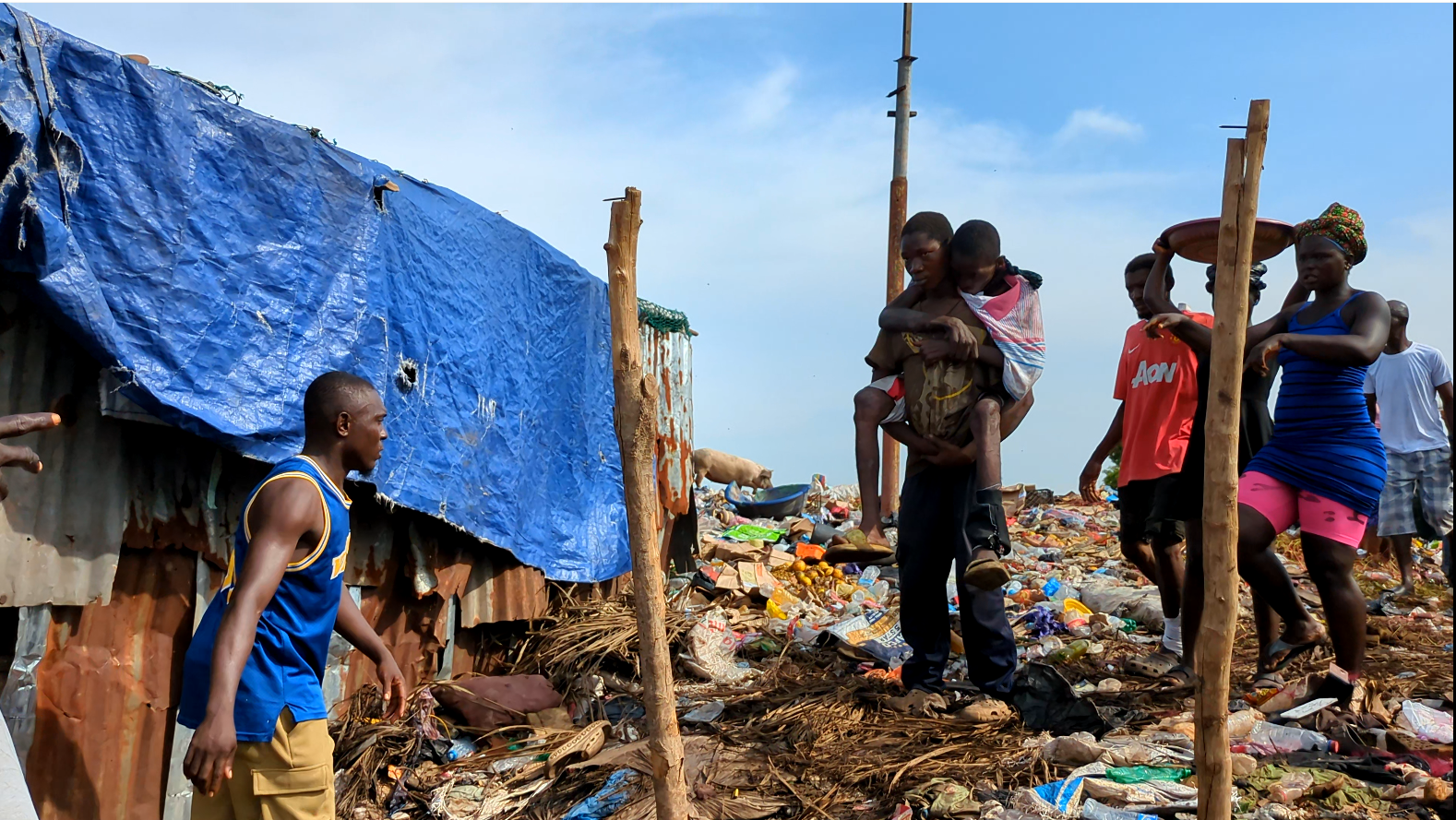
Families watched their loved ones perish on the streets. Literally. Corpses were left unattended. Sometimes for days. These scenes of horror and extreme human degradation sparked outrage. In April 2024, President Julius Maada Bio declared a national health emergency on drugs and substance abuse. He vowed to take decisive action, including the provision of rehabilitation and reintegration services for those struggling with substance abuse, and disrupting the supply chain that caused the problem. The National Taskforce on Drug and Substance Abuse was set up by the President to lead the response. Army general and public health expert, Prof. Foday Sahr, was appointed to head the new outfit. Professor Sahr is also head of the country’s National Public Health Agency.
Two years later, there has been a significant reduction in the images of young people battling drug addiction on the streets, especially in the capital, Freetown. But a closer look reveals that the problem persists, campaigners say.
Habib Kamara, Executive Director of Social Linkages for Youth Development and Child Link (SLYDCL), told Engage Salone that while some action had been taken by the authorities, much more work remained.
The charity serves as a referral pathway for the National Taskforce’s rehabilitation and reintegration programme. According to Habib, only 65 of the 1000 requests they have received nationwide were lucky to have a place on the government’s programme. Amara was one of them. He was among the first batch of people to be admitted it the new rehabilitation centre, which the government set up in Bo District, southern Sierra Leone.
Like every former addict, Amara said the first month after rehab was tough for him, but he had support at home. His aunt, with whom he currently lives, gave him the support he needed in his rehabilitation programme. Unlike Amara, Thaimu Bangura, 32, didn’t find a quick route back to rehabilitation. Thaimu has been dealing with substance abuse for nearly a decade now, after his first encounter with kush in 2017.
Thaimu had just completed a three-year diploma programme in peace and conflict studies at Fourah Bay, University of Sierra Leone. He was introduced to the drug at his birthday party. Since then, life has not been the same.
When Thaimu enrolled for the four-year Bachelor’s Degree programme at FBC, he was already addicted to Kush, and by his third year in the programme, he dropped out altogether due to addiction.
Thaimu first came into contact with SLYDCL in 2017 through the organisation’s outreach in the drug-infested communities of Lumley, where its head office is based. At the time, Sierra Leone had no government-run drug rehabilitation centre. SLYDCL supported his recovery and later employed him as a peer educator to help others overcome addiction.
“Because of me, many people quit drugs,” Thaimu said. “Some have graduated and are doing great for themselves. Some are even lawyers.”
But addiction was not done with him. After years of supporting others and watching many colleagues die from drug abuse, Thaimu relapsed and entered rehabilitation again. By then, the government had opened the country’s first national rehabilitation centre in Hastings. He completed the programme in 2024 and says he has remained sober ever since.
Mustapha Keller works at SLYDCL as a counsellor. He said they had seen lapses in Thaimou since he left the centre.
“I can’t say that he is 100 percent off it now. Recovering from drug addiction is a lifetime battle,” he told Engage.
In two years, the government has built four new rehab centres, which are located at the regional level – in Bo, Kailahu, Kono and Makeni. Not only are these limited in accommodation, campaigners say they are grossly inadequate. According to SLYDCL’s Habib Kamara, every district needs a dedicated rehabilitation centre, at the very least, to ensure that much needed rehabilitation services reach more people.
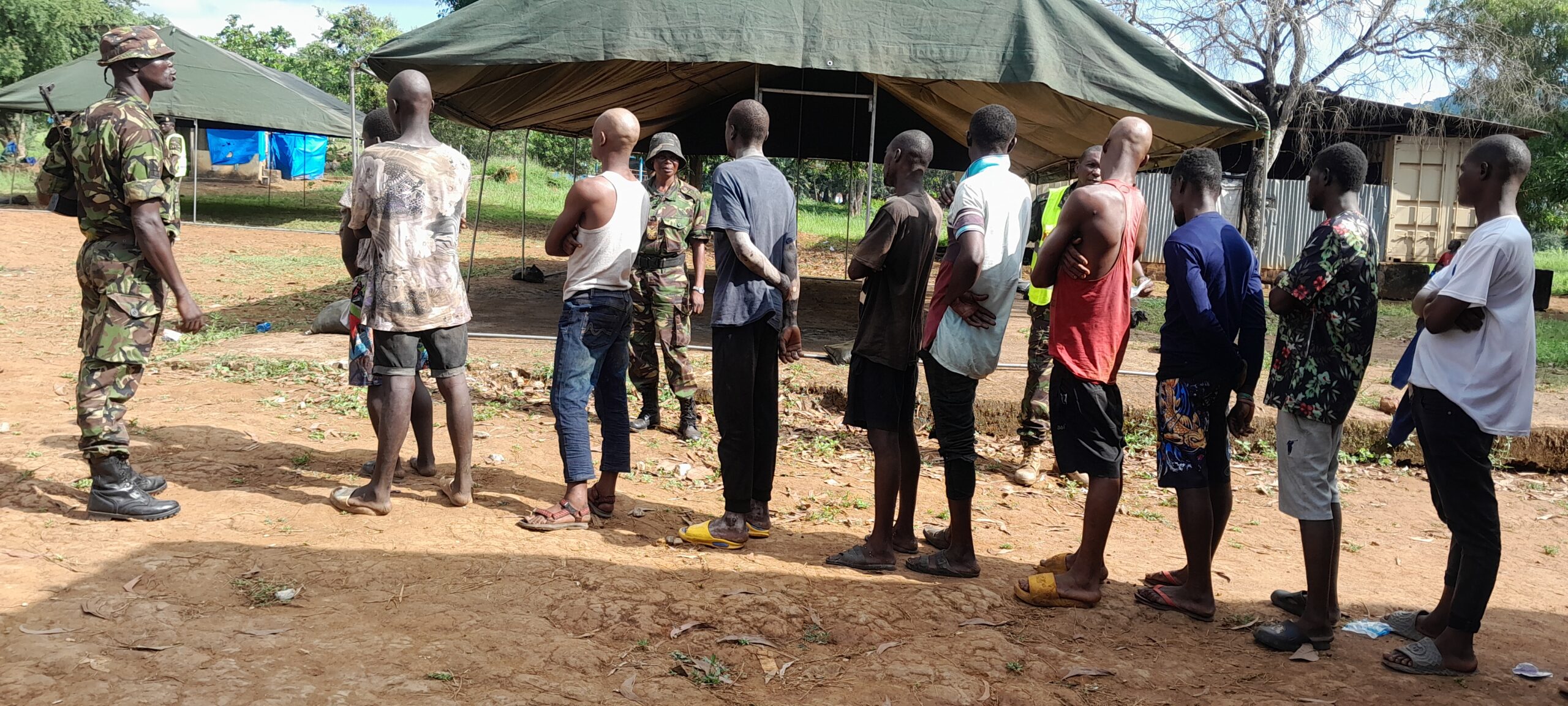
Ansu Konneh leads the rehabilitation and reintegration work at the National Taskforce. He said their work was underfunded as they relied entirely on the government for resources. The Task Force did not have enough resources to expand its services, he told Engage Salone.
Between the five centres, a little less than 900 people have completed the rehabilitation programme, out of over 5,000 people who have registered with his office demanding the service, said Konneh.
Konneh said that, despite challenges, graduates’ successes have encouraged more people to seek treatment. Consequently, requests for enrolment have piled up on his desk. Of the over 5,000 people who applied for enrolment in rehabilitation centres, over 3,500 are still on the waiting list, he said.
“If we get more funding from the government and partners, more young people will have access to rehabilitation services,” said Konneh, who is also the Director of Mental Health and Psychosocial Services in the Ministry of Social Welfare.
For people like Thaimu and Amara, who received help and have overcome addiction, the risk of relapse still stares them in the face. Experts say they need social safeguards and continued support to help them stay clean. Many of those leaving the government rehabilitation programme slip back into the habit, Konneh told Engage Salone. He explained that some had problems at home before enrolling into rehabilitation. Such unresolved problems force them back onto the streets, where they get into drugs again. Others, he noted, were homeless before and after rehab, making them vulnerable to their old habits.
While the nation, especially its young people, struggles to deal with addiction, unanswered questions remain about the drug trade.
The National Drug Law Enforcement Agency (NDLEA), says it has led countless raids since the beginning of its operations late last year. Data provided by the Agency show that 679 people were arrested between January and April 2026. Among these 248 people were convicted. Ibrahim Samuel Dugba, Director for Drug Prevention, Education and Training at NDLEA, said the raids had also led to the dismantling of many makeshift shacks used to sell drugs.
To ensure fast track hearing of drug related cases, the justice ministry assigned special judges and increased the sitting time to allow for speedy trial of drug-related cases
“Before now, cases took a long time – months and even years before judgment,” said Dugba.
NDLEA is among the least-funded agencies. Estimates from the Ministry of Finance show that the 2026 budgetary allocation to the agency was NLe 1.47 million (roughly $63,000 USD), a reduction from the NLe 2.07 million allocated in the previous year.
A major concern is that many of the victims of drug abuse are students from colleges and universities, like Amara and Thaimu.
Amara is very sure that he isn’t going back into drugs, despite the risks he faces as he returns to the same university campus where he was first exposed to substance abuse. He believes his experience has prepared him well to positively influence others.
“I am very happy that I am going back to campus, because I want to help others. I didn’t have help. This is what they told us in the rehab. They told us to help others out. Some people are on drugs, and they feel like there is no way out. Look at me. I felt I was wasted,” he said.