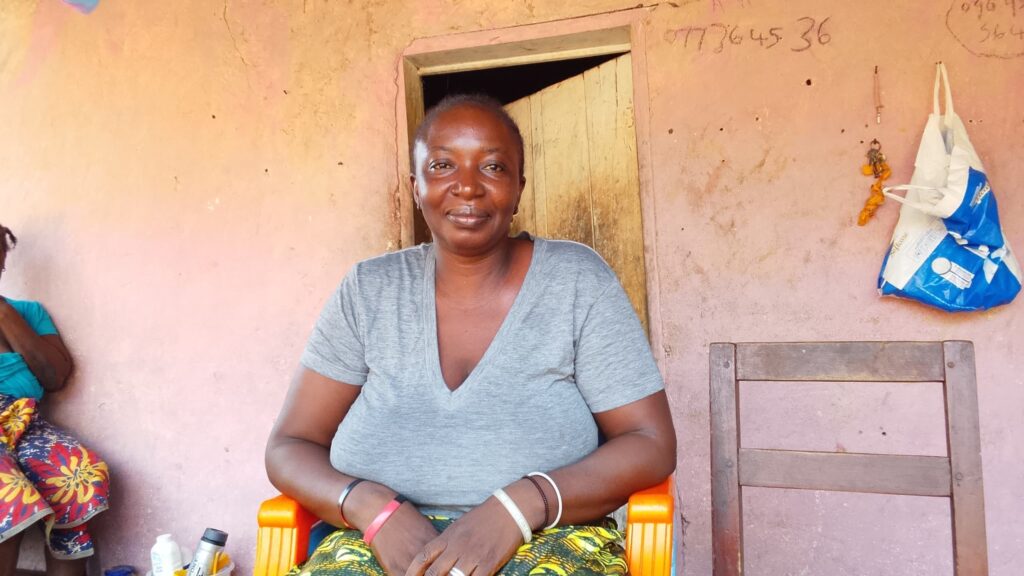
When Adama Sesay was diagnosed with diabetes in 2024, many worries ran through her mind. Foremost among them was the memory of her elder sister, whose leg was amputated as a result of diabetic complications.
“For weeks I was depressed,” recalls the 63-year-old widow and mother of three. “I know what diabetes did to my elder sister. They had to cut off her leg. So I felt depressed by the prospect of that happening to me.”
But Mammy Adama, as she is popularly known in her Gwentite community in the Red Pump neighbourhood of Freetown West, soon learnt to cope with her new reality. This meant adjusting her lifestyle and being mindful of the foods and drinks doctors advised her to avoid – sugary beverages, refined carbohydrates, processed snacks and trans fats – all common risk factors for diabetes.
Diabetes is a chronic disease caused by high blood sugar levels. It can lead to a wide range of health complications, including heart disease, stroke, kidney failure, vision loss, foot ulcers and amputations, and even death when vital organs are affected. In pregnancy, diabetes can affect the baby’s growth. Available data show that the disease affects people of all ages.
Mammy Adama’s story mirrors that of a growing number of Sierra Leoneans living with diabetes and various other Non-Communicable Diseases (NCDs).
The World Health Organization (WHO) describes NCDs as a rapidly growing health crisis globally, but more so in Africa and other low-income countries, where they account for more than a third of deaths among the poorest populations.
Data from the Ministry of Health (MoH) in Sierra Leone indicates that diabetes is one of the top three prevalent NCDs in the country, alongside hypertension and other cardiovascular diseases. Others include cancers, chronic respiratory diseases, chronic kidney diseases and various mental health disorders. The MoH ranks diabetes second, behind hypertension.
Dr Abdul Jalloh, Director of Mental Health and Non-Communicable Diseases, says this is based on data from studies by independent researchers, noting that no national study has been conducted to ascertain the magnitude of this category of illnesses in the country.
“We have not done any national survey recently to show the exact prevalence,” he tells Engage Salone. “But some studies indicate that these are the most prevalent.”
Observers say this lack of comprehensive data reflects years of neglect of critical aspects of the country’s health system.
Clinical pharmacist and public health advocate Dr Manal Ghazzawi, laments a dearth in both data and surveillance, not just on NCDs, but the entire health system.
Ghazzawi runs KnowHep Foundation Sierra Leone, a charity that raises awareness about hepatitis and diabetes and conducts free screening exercises as part of public sensitisation efforts. She says many Sierra Leoneans live with chronic illnesses without knowing, only discovering their condition when complications set in, making it extremely difficult to reverse. Because they are often diagnosed late, NCDs account for high premature death rates globally, with approximately 41 to 43.8 million deaths annually, representing about 75% of all fatalities worldwide, according to WHO figures.
Observers say this lack of sufficient data reflects a fundamental problem and years of neglect of essential aspects of Sierra Leone’s healthcare sector.
“We don’t really undergo robust research that is impactful. It’s just small studies that are done here and there,” Ghazzawi, a Doctor of Pharmacy, tells Engage Salone.
“Without data and without surveillance, you cannot do proper planning,” she stresses.
For Mammy Adama, diabetes runs in her family. Besides her elder sister, a nephew and a cousin also live with the condition.
But she feels lucky. “The only complication I have is this,” she says, pointing to a small wound on the right side of her lower lip. She explains that she had experienced the wound long before her diagnosis with Diabetes.
“It used to come and go. But this one has been there for over four months now,” she laments.
Once considered a disease of the wealthy, diabetes has increasingly affected the poor. Stories like Mammy Adama’s shatter this perception, showing how Sierra Leoneans live with the condition and struggle to access basic treatment.
Mammy Adama herself has been struggling to adhere to her prescribed diet, as a lot of the healthier alternatives are beyond the means of someone like her, who lives from hand-to-mouth. She earns a living selling sachet water, using the proceeds to meet her daily needs. Her situation is further complicated by her hypertension condition. She has to take two different medications daily for diabetes and hypertension, each costing NLe50 ($2.04) for a packet of eight tablets.
A pressing concern for Mammy Adama is her doctor’s recommendation to switch drugs as part of efforts to urgently bring down her blood sugar, which had risen to a dangerous level. The newly recommended medication costs NLe80 ($3.5) per packet. She relies on her children to purchase her medicines, but their limited incomes make this difficult.
For people living with diabetes and other NCDs outside Freetown, challenges are compounded by limited access to healthcare services. Sarah Kanu, 45, a resident of New London in Mile 91, Tonkolili District, has lived with hypertension for the last five years. When she was diagnosed, she was told she had been living with it for so long that her condition was critical. She is now constantly on medication and largely confined to her home.
Sarah lives with her elderly mother, who is also hypertensive. With five school-going children to care for, the younger Sarah struggles to balance medical expenses with education costs, especially after losing her business due to ill health. “I used to buy and sell, but now I can’t do any business because of this sickness. I can’t walk long distances,…” she tells Engage Salone.
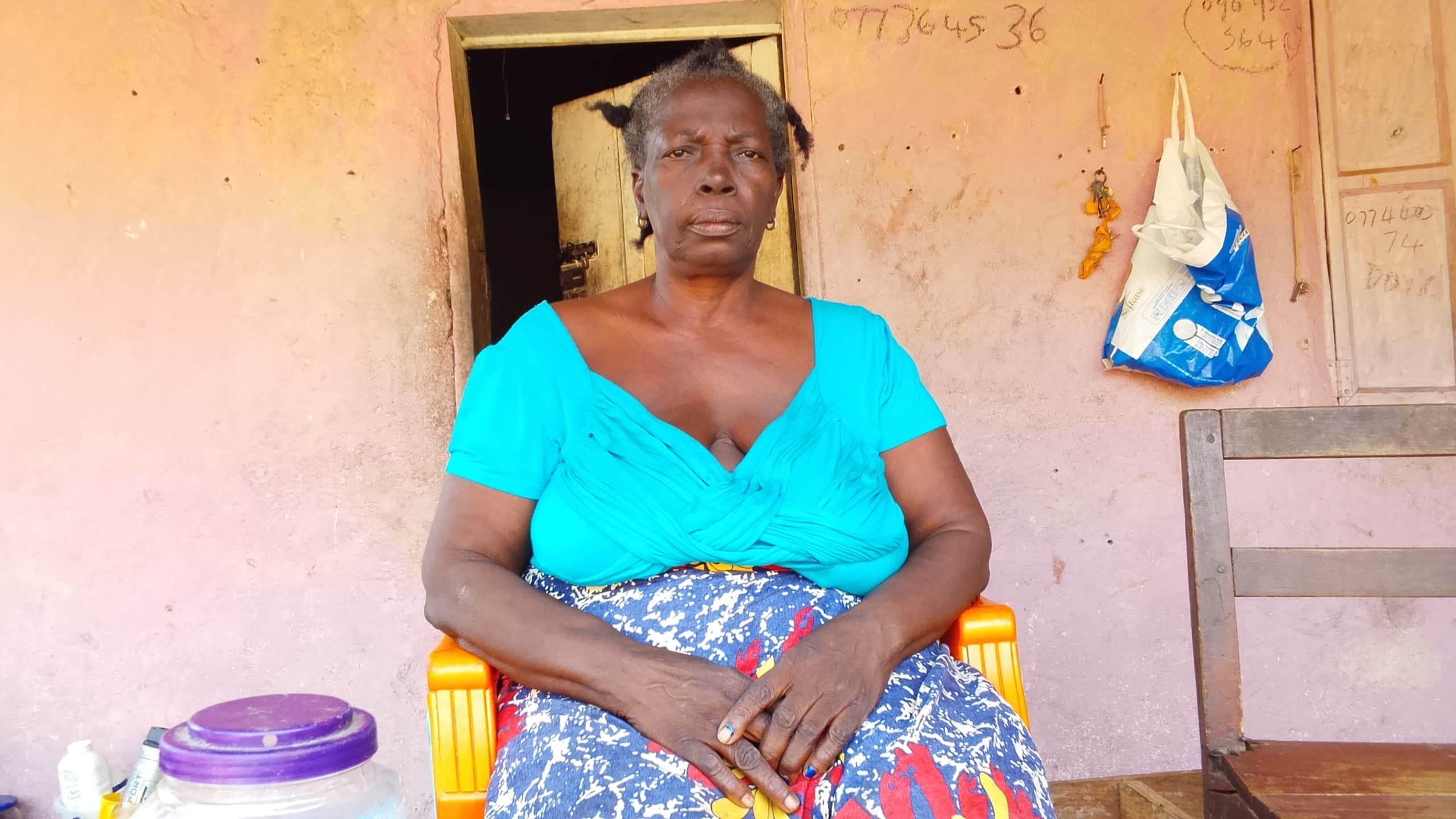
At times, when she goes to the hospital and cannot afford the fees, she simply returns home to “rest.”
A few blocks from the Kanu family, Adama Sankoh, a family friend, is both diabetic and hypertensive. She has placed all her hopes on God, as she can’t cope with the demands of lifestyle changes, especially with diet, let alone the medications.
“I want to avoid white rice because my sugar level is high. But I can’t starve. I don’t have money to buy the right food,” she says.
Meanwhile, Adama Sankoh’s condition is rapidly deteriorating. Her fingernails are rotting, a condition similar to gangrene, often associated with poorly managed diabetes. Gangrene occurs when high blood sugar damages blood vessels and nerves, cutting off blood flow and causing tissue to die.

After several admissions in the only major health facility run by Caritas in Mile 91, Adama Sankoh has visited many other hospitals within her reach in the last few years, in search of treatment that could improve her condition, from Lonsar to Yoni Bana. She says she owes Caritas NLe300 ($12) for unpaid medication. And she now plans to visit Kono in the eastern region of the country. But she can’t afford the NLe500 ($22.00) needed for transportation.
“My condition is unbearable now. I wake up at night to urinate at least 10 times. And that’s because of my diabetes. I don’t want it to get any worse,” she says, while appealing for any form of support to enable her to travel to Kono.
Like Mammy Adama, Sarah, her mother and Adama Sankoh, most people living with diabetes in Sierra Leone have type 2 diabetes, according to studies, including one conducted in 2017 in the southern Bo District.
The Diabetes Atlas, a publication of the International Diabetes Federation (IDF), estimates that 24.6 million (1 in 20) people ages 20-79 were living with diabetes in Africa in 2024. The organization estimates this number to grow to 59.5 million by 2050, if appropriate action is not taken by countries in the region with the highest proportion of undiagnosed diabetes. According to the data, 170, 000 adults are living with Diabetes in Sierra Leone, with 1,100 annual deaths. It also suggests that the proportion of people (adults (20–79 years)) with undiagnosed diabetes in the country is approximately 79%. This is attributed to a lack of awareness, limited access to screening services, and a lack of health infrastructure, especially in rural areas. Only about 8 to 11 percent of public health facilities in Sierra Leone provide services for diabetes, making early diagnosis extremely difficult for the general population, the IDF data shows.
Dr Ghazzawi notes that the disparities in access to NCD services between urban and rural areas mean that treatment is concentrated at the tertiary hospitals
“In the primary healthcare facilities, you would hardly find a doctor, for example. It’s mostly manned by CHOs (Community Health Officers) and nurses. That could be a problem,” she says, noting that a lot of deaths occurring in rural areas are undocumented, and could possibly be the result of undiagnosed NDC conditions like diabetes.
The good news is that the government has acknowledged this deficiency. Citing data from independent studies, the Health Ministry says over a 100 percent increase in diabetes cases was recorded between 2011 and 2024, from 72, 000 to 170, 000, representing a national prevalence of 4.8 percent. Officials have been quoted warning that the numbers could be much higher, given that it is a highly under-reported disease in the country.
The ministry also agrees with campaigners on the need for early detection. But the question remains on the availability of services and public awareness.
Officials say they are working to expand the response to the disease as part of the overall plan for NCDs. According to Dr. Jalloh, major priorities for the NCDs division under his directorate include ongoing efforts to construct a national cancer diagnostics center, expansion of dialysis services nationwide, and procurement of equipment like CT scanners, Ex-rays and Mammograms.
With diabetes specifically, Dr. Jalloh says the plan is to expand services at the primary healthcare level, including making available treatment commodities and improving early diagnostics capacity. At the moment, all patients who pass through the triage of Connaught Hospital, Freetown’s main referral health center, get tested for diabetes, but at a cost.
Jalloh further explains that the government also intends to introduce prevention policies.
“The bottom line is early detection. We screen early, and we detect and treat early,” he says.
He adds that the government intends to introduce a SIN Tax targeting products that pose health risks to the population, such as alcoholic or sugary beverages.
A major obstacle to all these is that the National NCD plan, which guides the implementation of such policies, expired in 2025. Officials say plans are underway to review it.
But even with the best imaginable plan, funding remains the biggest challenge. Much of the Health Ministry’s plans rely heavily on external support. Latest estimates in the 2026 budget indicate no improvement. Data from the Ministry of Finance show that the directorate of Mental Health and NCDs was allocated a budget of NLe 900,000 ($36,000), representing a tiny fraction of the total health sector allocation of NLe 1.7 billion ($68,000). Only NLe100,000 (USD4,000) from the entire directorate’s allocation is meant for the NCDs division. For those who are already living with diabetes in Sierra Leone, the urgency is about accessing affordable basic treatment and living a safer lifestyle. While she is clearly worried about the diabetes risks to other people, Mammy Adama’s biggest concern is that she cannot afford her new treatment regimen. She is trapped between medication that worsens her health and a diet that goes against medical advice, with no viable alternatives.
“If I had enough [money], I would be doing the right thing as I am concerned about the current status quo,” she says.
With additional reporting by Kemo Cham