Content Warning: This article contains descriptions of teenage pregnancy, sexual violence and traumatic childbirth complications. Some readers may find the content distressing.
At the tender age of 13, Marie (not her real name) became a victim of teenage pregnancy. Her life changed forever. A childhood cut short and a future jeopardised. Marie’s pregnancy was not only a case of another teenage girl getting pregnant. She faced complications during childbirth that brought her close to her death. She came out of it alive, but with a very high price and an everlasting scar. Physically and mentally.
Throughout her pregnancy, Marie did not have antenatal care. She did not attend a clinic because there was none in her village in southern Sierra Leone, near the Liberian border. The nearest clinic was too far away, she said. She gave birth at home, with the help of a traditional birth attendant.
When Marie went into labour at home in her village, she struggled to give birth. They told her the baby was big. So, she needed help. The help that she got was shocking. “They stuck an egbakoh into my mouth, believing that it would help the baby to come out,” Marie recalled. The egbakoh is a flat wooden spoon used for cooking. Traditional birth attendants use the technique to cause the pregnant woman to scream and push the baby during labour.
Among the complications from that experience was uncontrollable leaking of urine, a condition known as obstetric fistula, a hole that develops in the birth canal as a result of prolonged, obstructed labor during childbirth.
“I would be sitting and urine would leak without me knowing. I couldn’t feel it when the urine came out,” Marie explained. No one in her village understood Marie’s condition. It took a visiting nurse to spot the problem.
“When she passed by, I perceived an unusual odour that alerted the nurse in me,” said Marian Isata Swaray, who was visiting Marie’s village. Marian is also the founder of a maternity clinic on the outskirts of Freetown that helps care for women with fistula. She then spoke privately with the young mother to learn more about her condition. At this point, Marian decided to move Marie to Freetown, where she started receiving care.
Despite recent gains, Sierra Leone still has one of the highest rates of women who die and those left with serious health complications during childbirth globally. For every woman who dies during childbirth, 20 to 30 are left with a debilitating condition or morbidity, including obstetric fistula. Many women in the country give birth at home, without medical help, which increases the risk of complications like fistula, often requiring emergency medical care to save the life of the mother and baby.
According to a 2021 UNFPA report, an estimated 2,400 women were living with fistula in Sierra Leone.
“For every maternal death, an estimated 20 to 30 women are left with a fistula,” the UN’s sexual and reproductive health agency says.
Women who survive obstructed labor but develop an obstetric fistula suffer greatly from social stigma, including abandonment by husbands and exclusion by their communities. This can lead survivors deeper into poverty and cause them severe mental health issues.
Haja Hawa Turay founded Haikal Foundation, a local charity in Bo that provides support to rehabilitate and reintegrate fistula survivors into their families and communities. She highlighted the social burden that the condition puts on women, alongside its severe health issues.
“Obstetric fistula represents one of the most severe, yet preventable maternal health conditions. It reflects not only a medical complication but also a profound social injustice affecting women who often face stigma, isolation, and neglect,” she said.
The man who raped Marie was a mechanic. He abandoned her when she got pregnant. No case was reported, no action was taken. She recalled spending a long time alone because of the stigma she faced in her community, including from her friends who shunned her because of her condition.
“I would sit by myself and cry,” she narrated.
It is because of experiences like this that Haikal Foundation’s Haja Hawa Turay stresses the need for a holistic approach that prioritises prevention and care.
“Addressing fistula is both a health priority and a moral imperative, rooted in the belief that no woman should suffer a preventable condition that strips her of dignity, health, and social belonging,” she told Engage Salone.
Unlike many other survivors, Marie found support in her immediate family. But because of poverty, there was little they could do to help with her condition, especially with the added burden of looking after her baby as a single mother.
“It was tough bringing up my child in that condition. I cried every time I looked at him, ” she said.
Globally, half a million women and girls are estimated to be living with fistula, one of the most serious and tragic childbirth injuries, which is almost entirely preventable. Experts say fistula is a manifestation of the failings in health and social systems in a country – poverty and gender inequality, including harmful practices such as child marriage and adolescent pregnancy, as in the case of Marie.
The Sierra Leone government, as part of its efforts against the prevailing trend of maternal deaths in the country, says it has intensified its response to fistula in recent years. The plan is outlined in the National Strategy to End Obstetric Fistula by 2030, developed by the Ministry of Health with support from UNFPA Sierra Leone and foreign governments.
“Our goal is simple: by 2030, no woman in Sierra Leone should experience this preventable catastrophe,” Health Minister Dr Austin Demby said at the launch of the document in 2023. Three years later, the government says it has been working to deliver on the promises contained in the strategy through collaboration and partnerships to operationalise a five-year (2023–2027) national programme designed to prevent, provide surgical treatment and care, expand regional access, and train health workers.
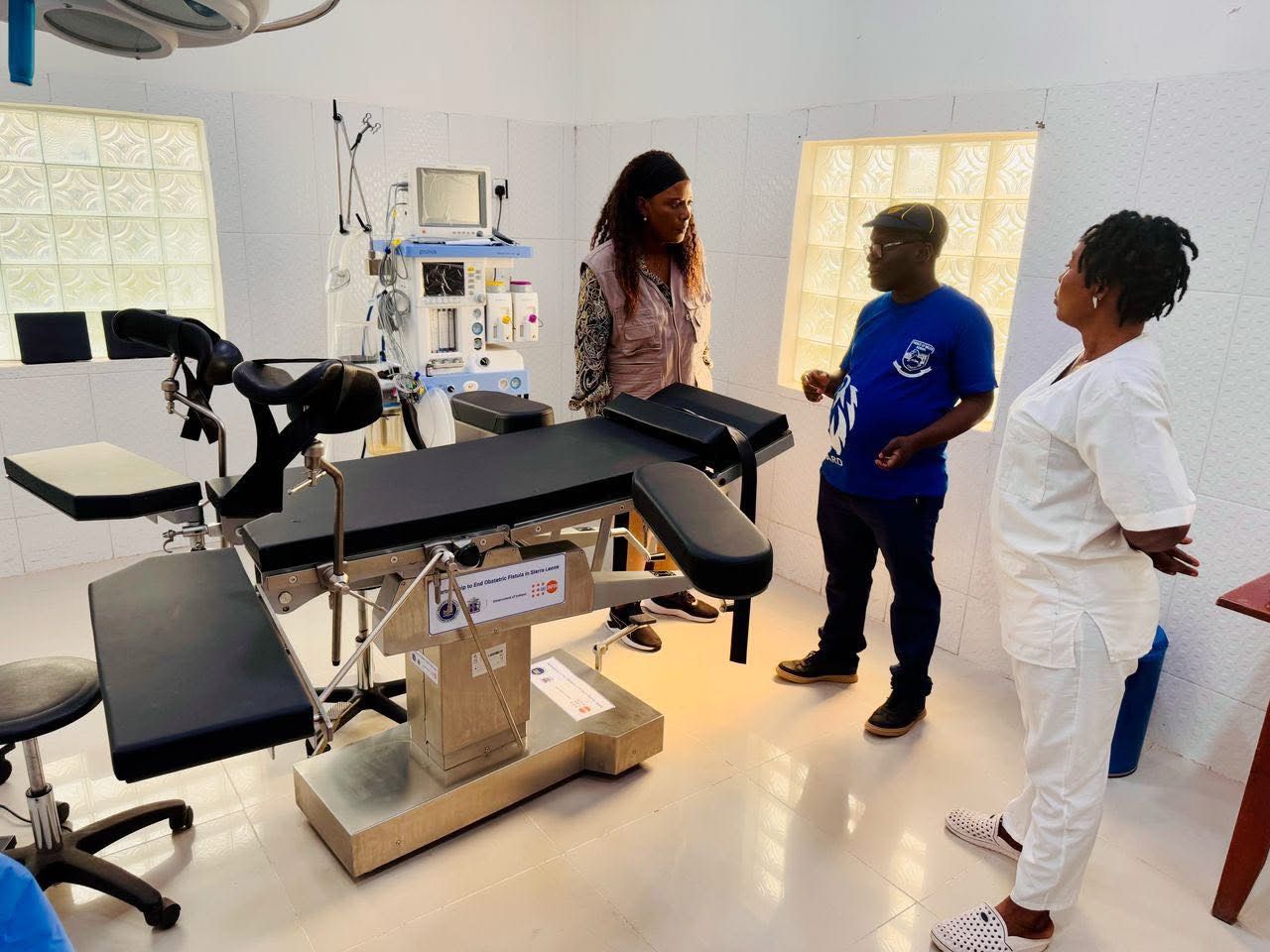
The southern city of Bo now has a fistula care facility within the main referral hospital. The facility was opened in July, 2024 and provides care for women in the region and other parts of the country. It is the country’s second fistula care facility, taking some of the burden off the Aberdeen Women’s Centre in Freetown, which was the only provider of comprehensive fistula care for decades. According to UNFPA data, between 2024 and 2025, over 700 women and girls were screened, with more than 200 receiving successful surgical repairs.
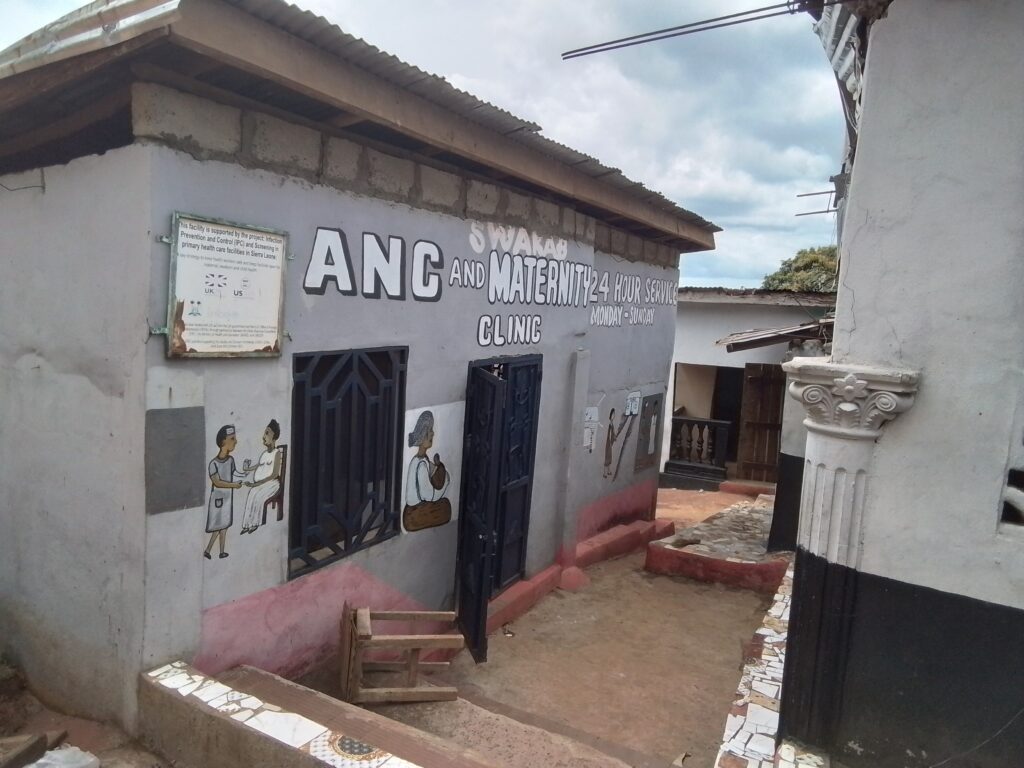
But campaigners say much more work is needed for Sierra Leone to meet its 2030 target to eliminate obstetric fistula. Marian, who runs SWAKAB PHU, the facility that initially cared for Marie, said provision of access is not enough. She stresses that the services must be affordable too. Marian also wants fistula care to be included in the services provided in the free healthcare programme targeting pregnant women, among others.
In the last two years, Marian’s clinic, SWAKAB, has seen 16 cases of obstetric fistula, the majority of which were referred for further care. In May alone, the facility referred four cases, one of them a 10-year-old survivor of sexual violence, another serious problem in Sierra Leone. In 2025, more than 1,900 cases of sexual penetration (rape) of children were reported to the police.
Dr Sattu Issa, Programme Manager for Reproductive Health and Family Planning in the Ministry of Health, said obstetric fistula services are already free. She pointed out that the government has institutionalized services by expanding access at the regional level. She also revealed that a third major facility equipped to conduct fistula repair is ready to receive patients in the northern city of Makeni.
Dr Issa said the government has built a system in which the service is not limited to surgery; after surgery, the Ministry of Social Welfare coordinates rehabilitation and reintegration packages for survivors. Adolescents, like Marie, who drop out of school due to their condition, are assisted in returning to school, she told Engage Salone.
But she quickly pointed out that the goal is to put an end to the condition, and she said they seek to achieve this by training health providers to prevent such complications in the first place.
“We have come a very long way in efforts to eliminate fistula, because before now, it was just partners speaking about fistula. Now the government is involved. Partners might leave, but the government stays”, she said.
“We believe that the rate at which new cases occur has reduced…But we can only say for sure the number with research,” Dr. Issa told Engage Salone.
As she continues to endure the mental and physical pain of her experience with obstetric fistula, Marie’s wish is that no other girl would have to endure what happened to her. Even after her surgery, the pain has not gone away. She has difficulty sitting for long periods. As her child turns two, she hopes to return to school and continue her education. Her ordeal has inspired her to become a nurse.
Sierra Leone has one of the highest rates of teenage pregnancy in the world, according to the UN’s children’s agency, UNICEF. National data show that 21% of girls between the ages of 15 and 19 have begun childbearing, and up to 40% of maternal deaths happen among teenagers.