
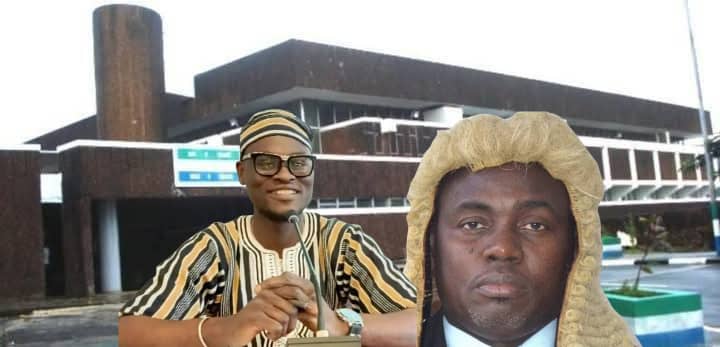
In January 2025, the Speaker of Parliament, the Honourable Segepoh Thomas, banned journalist Melvin Mansaray from the Parliament precincts. The ban was immediate and indefinite. One year on, Mansaray, a parliamentary reporter and an outspoken critic of public institutions and officials, has not set foot on parliamentary grounds.
What really happened? Mansaray was accused of “insulting conduct.” In the words of the Speaker, the journalist had appeared on several media outlets “criticising the decision of Parliament” on a vote relating to the removal of the Auditor-General. One wonders when and how criticism becomes an insult, but that is a conversation for another day.
While the Speaker accused Mansaray of insulting Members of Parliament and making allegations without evidence, he did not make clear what evidence existed against the journalist. There was no due process. With one powerful pronouncement, a citizen and journalist, whose job is also to speak truth to power, was banished from the corridors of Parliament. Doesn’t that scare you?
Since then, the journalist has issued an apology to Parliament, and several efforts have been made to persuade the authorities to allow Mansaray to return and carry on with his vital duty of informing the public and holding power to account.
There are several problems with the Melvin Mansaray situation, and we need not remind ourselves that the implications go far beyond one journalist. That the Speaker (with all due respect to his office) can summarily determine and impose an indefinite ban on a journalist or any citizen demonstrates how absolute power undermines democracy and free speech. That the ban has lasted a year without review or reconsideration speaks to this chilling reality.
After making the ruling, Honourable Thomas went on to say that “this serves as a warning to other journalists…” This statement requires no further interpretation. One can only imagine the heightened caution and even self-censorship that the Parliamentary Press Gallery has operated under since Mansaray was expelled a year ago.
While we do not question the authority of the Speaker to exercise powers conferred by both the Constitution and the Standing Orders, it is important to acknowledge and respect Mansaray’s constitutional rights to freedom of expression and of the press. The boundaries can be debated. Public interest can be invoked. The public’s right to know can be cited. So too can the Speaker’s powers. So many things can be true at the same time. But what also matters is fairness. Was it fair to indefinitely ban a journalist based on second-hand information, without due process, without a proper review of allegations, evidence, or an opportunity to defend himself?
We must also call out the Sierra Leone Association of Journalists (SLAJ) and wider civil society, whose posture and approach have enabled such a harsh exercise of power. While SLAJ criticised the decision, the outcome remains deeply troubling. You cannot have a situation where a journalist is banned from Parliament indefinitely and think you are winning. Engagement with Parliament is important, but the bigger question remains: how do we protect press freedom? How do we ensure that, even as we promote professionalism, journalists enjoy the protections and privileges that come with their work? This is not only about Melvin. It is about power. It is about democracy. It is about press freedom.