
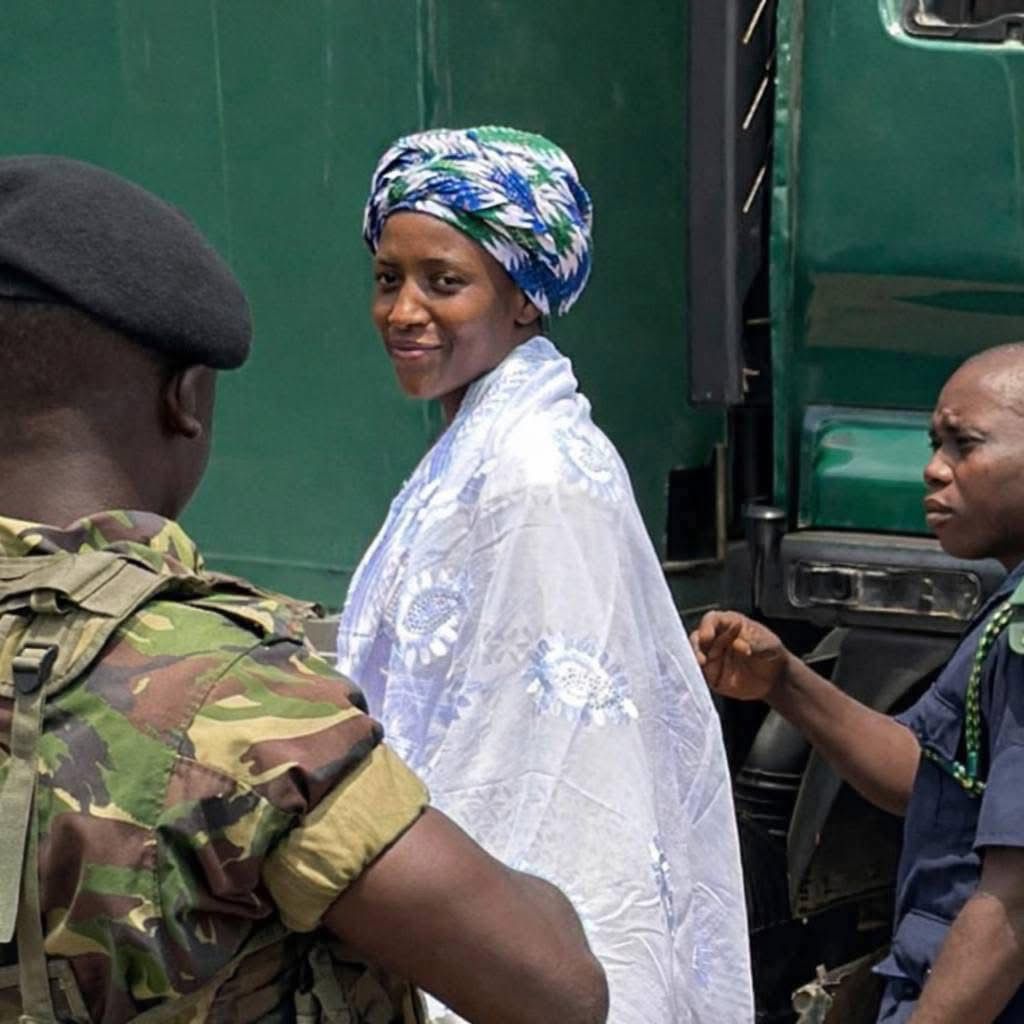
Sierra Leonean entertainer, model and political activist Zainab Sheriff has been in jail since her first court appearance on 23 February, 2026. She was denied bail again by Magistrate Braima Jah during her third appearance at the Pademba Road Magistrates Court. The matter came up again on 11 March, 2026. This means the activist and mother of a young child will remain separated from her family and will probably spend International Women’s Day behind bars at the Correctional Centre in Freetown.
Zainab’s case—from her arrest to arraignment and continued incarceration—raises several troubling questions: about institutional independence, about the State’s intolerance for dissent, and about a pattern that increasingly points to punishment, intimidation and persecution. It also raises concerns about what this means for women’s participation in politics. Let’s unpack it.
What we are witnessing with the treatment of Zainab Sheriff is the blunt exercise of power, as the State deploys the full machinery of its authority to achieve two outcomes: punishment and intimidation. Punishment before the case against her has been established or proven, and without regard for the presumption of innocence.
As one commentator put it in Krio, “Zainab de pay for in mot.” It is scary that in a democracy, people would be made to pay for what they say regardless of the weight it bears.
Never mind that the All People’s Congress (APC) has already been fined by the Political Parties Regulation Commission (PPRC) over Zainab’s utterances. Her continued detention represents a very high price to pay for expressing oneself in a way that makes the powerful uncomfortable. Legal experts have argued that bail is the default position under the new Criminal Procedure Act for offences such as the one she faces, unless there are compelling reasons to deny it. What we have been told so far is simply that the case is at a “crucial stage.” Interesting.
This case, centered on Zainab Sheriff, carries broader implications for women’s participation in politics. It sends a loud and unmistakable message: women may be welcome in politics, but they must not bring their authentic selves, especially women like Zainab who do not pull their punches.
The government often boasts about its track record in advancing women’s rights and political participation. On paper, it has indeed passed several laws and reforms that favour women. Yet the same government has built an unenviable record in its
treatment of women leaders who either belong to the opposition or simply refuse to fall in line even when the line seems crooked. Examples include Femi Claudius-Cole, Yvonne Aki-Sawyerr, Zainab Sheriff herself, who has been arrested before, Lara Taylor-Pearce, who was pushed out of office while serving as the country’s top public auditor.
More recently, the young Edwina Jamiru, who does not identify with any political side, was locked up again in a police cell for at least a week before being quietly released with the help of women lawyers and rights groups.
Zainab’s case may well follow the same familiar script: detain, punish, release—and then allow the case to quietly fade away. The impunity surrounding such behaviour is staggering.
As we discuss the case of Zainab Sheriff and others who have had to endure the excesses of power, it is useful to reflect on Tukumbi Lumumba-Kasongo’s analysis of the African state’s security arrangements. He argues that the security architecture in many countries has been directed against the poor people and not against the real enemies. “In recent years, women, students, the lumpen proletariat, and peasants have been the particular targets of the state’s security,” Lumumba-Kasongo writes. “In short,” he continues, “the police and military apparatus in many African countries have been anti-people and anti-development,” concluding that “the security of the state is an instrument of the ruling classes…”
For a country that speaks loudly about women’s empowerment, the State’s treatment of women, particularly outspoken women suggests something very different. Too often, the issues border on free speech and are of little real consequence.
So what message are we sending to young girls and women who may be considering a life in public service or politics? That they are welcome, but only if they remain “well-behaved” and never dare to shake the table?
Sections of civil society and women’s groups have already called for Zainab’s release on bail. LAWYERS have demanded that her rights be fully respected. The Institute for Legal Research and Advocacy for Justice (ILRAJ), which has also been involved in the matter, has launched a social media campaign calling for her release, noting that “freedom for Zainab Sheriff is freedom for all women in Sierra Leone.” Will common sense, compassion and respect for rights prevail ahead of International Women’s Day?